publications
Full list of my publications in reverse chronological order. Also available on Google Scholar.
2026
-
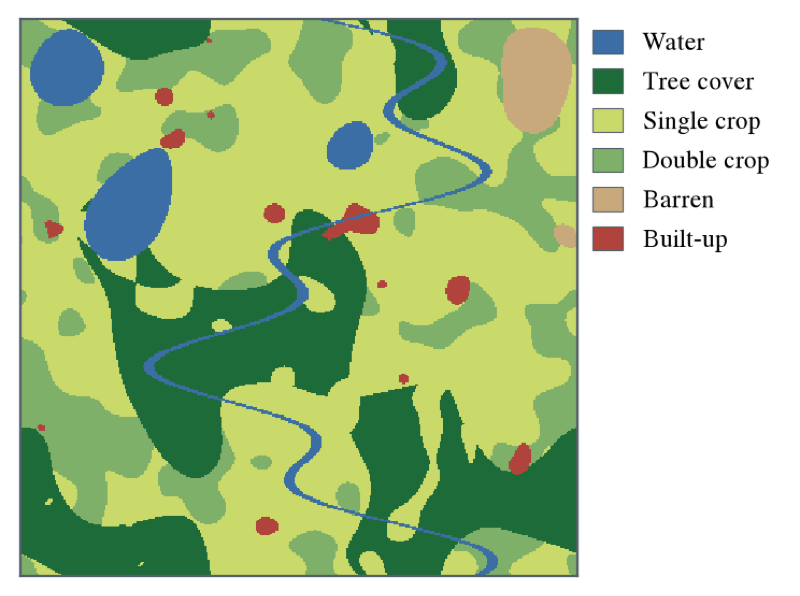
India’s diverse agricultural landscapes demand a single Land Use and Land Cover (LULC) product integrating both intra-annually static (built-up, tree cover, barren land) and dynamic (water seasonality, cropping intensity) classes for sustainable Natural Resource Management (NRM). Existing LULC products suffer from limited thematic coverage of dynamic processes, imprecise delineation of fragmented smallholder features, limited reproducibility, and poor performance of monolithic classifiers on spectrally similar categories. We introduce a hierarchical decision-tree framework that breaks complex classification tasks into targeted sub-tasks, offering methodological improvements in detecting monsoon water, delineating tree-croplands, and classifying cropping intensity. Class-wise evaluations demonstrate superior performance: SAR water detection achieves an NRMSE of 0.33 (vs. baselines 0.53–0.75), tree-cropland macro-average of 0.94, and cropping intensity macro-average of 0.88 (vs. baseline 0.77). Crucially, this study ensures transparency and reproducibility in LULC mapping. We publicly release four curated datasets alongside the entire classification pipeline implemented on the Google Earth Engine commodity platform. The resulting pan-India output maps at 10m resolution are hosted on CoRE-Stack (digital public good) for easy accessibility and analysis [ 24 ], already powering real-world applications in water-security planning [ 61 ] and agricultural studies [ 50 ].
-
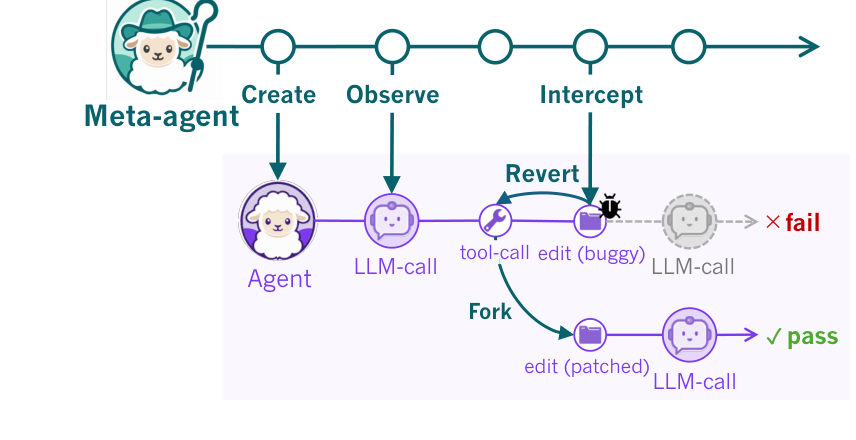
As LLM agent systems take on more complex tasks, they increasingly rely on meta-agents: higher-order agents that create, operate on and manage other agents. Meta-agent operations such as coordinating agents, halting risky actions before execution, or repairing failed runs, require runtime manipulation of agentic execution. Yet existing agentic substrates make this difficult: they expose only transcripts and environment snapshots, forcing meta-agents to build ad hoc tooling to reconstruct and operate over full execution state. Therefore, we introduce Shepherd, a Python substrate grounded in functional programming principles, where an agent’s execution is itself a first-class object that a meta-agent can easily inspect and transform. Every model action, tool call, and environment change becomes a structured event in a reversible, Git-like execution trace, where any past state can be reverted 5x faster than docker commit and fork. Three example use cases show Shepherd’s versatility: (1) a supervisor meta-agent prevents conflicts among parallel coding agents, lifting pair-coding pass rate from 28.8% to 54.7% on CooperBench; (2) a counterfactual optimization meta-agent repairs agent workflows by proposing edits and replaying runs from the point of changed behavior, outperforming MetaHarness on Terminal-Bench 2.0 by 12.8% with 58% lower wall-clock; (3) a training meta-agent picks fork points during rollouts to improve credit assignment in long-horizon agentic RL, doubling GRPO’s uplift on Terminal-Bench 2.0. We open-source Shepherd to enable principled and efficient operations over agentic execution for both users and meta-agents.
-
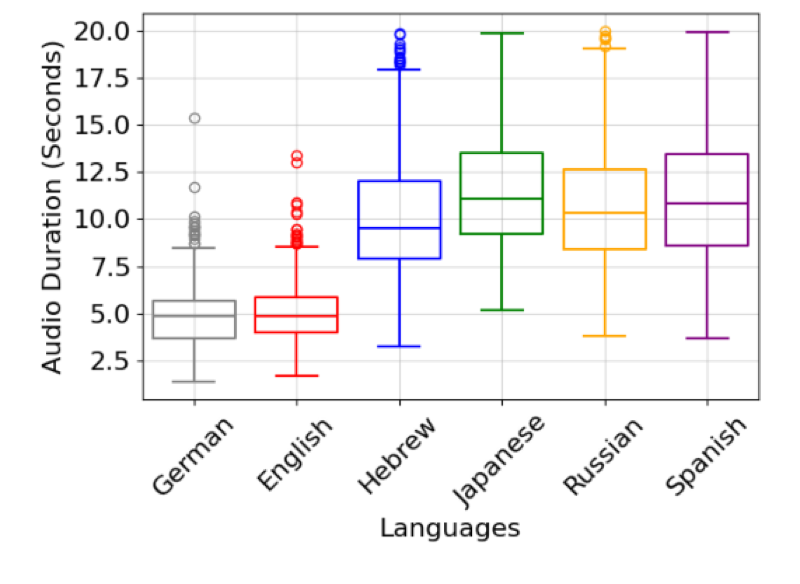
Modern deep learning models often achieve high overall performance, but consistently fail on specific subgroups. Group distributionally robust optimization (group DRO) addresses this problem by minimizing the worst-group loss, but it fails when group losses misrepresent performance differences between groups. This is common in domains like speech, where the widely used connectionist temporal classification (CTC) loss not only scales with input length but also varies with linguistic and acoustic properties, leading to spurious differences between group losses. We present CTC-DRO, which addresses the shortcomings of the group DRO objective by smoothing the group weight update to prevent overemphasis on consistently high-loss groups, while using input length-matched batching to mitigate CTC’s scaling issues. We evaluate CTC-DRO on the task of multilingual automatic speech recognition (ASR) across five language sets from the diverse ML-SUPERB 2.0 benchmark. CTC-DRO consistently outperforms group DRO and CTC-based baseline models, reducing the worst-language error by up to 47.1% and the average error by up to 32.9%. CTC-DRO can be applied to ASR with minimal computational costs, and, while motivated by multilingual ASR, offers the potential for reducing group disparities in other domains with similar challenges.
2025
-
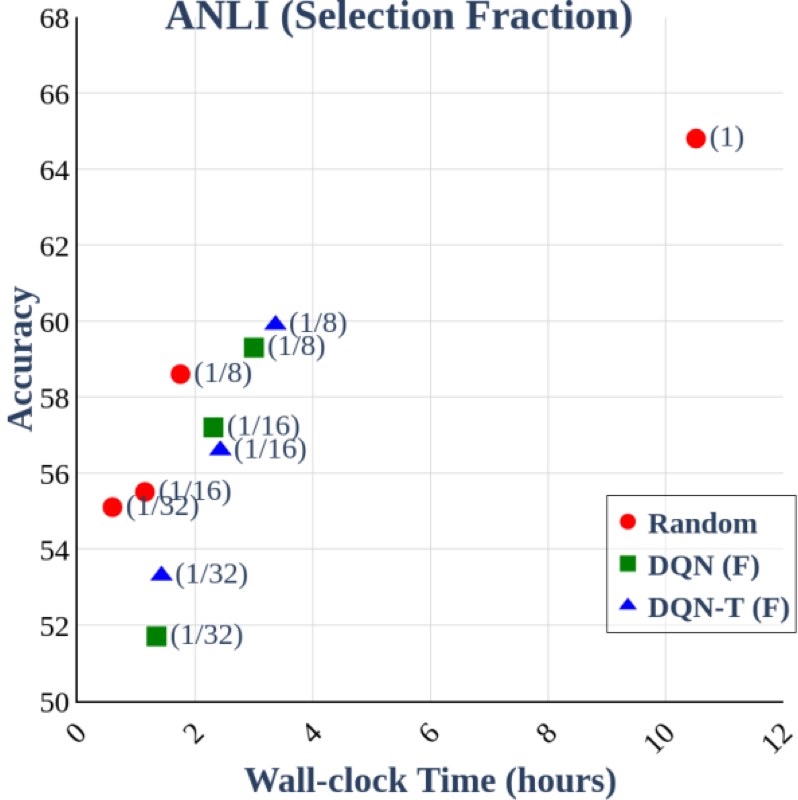
Data selection for finetuning Large Language Models (LLMs) can be framed as a budget-constrained optimization problem: maximizing a model’s downstream performance under a strict training data budget. Solving this problem is generally intractable, and existing approximate approaches are pretraining-oriented and transfer poorly to the fine-tuning setting. We reformulate this problem as a tractable Markov Decision Process (MDP) and train agents using various Reinforcement Learning (RL) methods to learn optimal data selection policies, guided by an efficient, proxy-model-based reward signal. Across four datasets, training on a 5% subset selected by our approach matches or outperforms fine-tuning on the full dataset by up to 10.8 accuracy points, while cutting wall-clock training time by up to 2 times, highlighting the promise of RL-guided data selection.
-
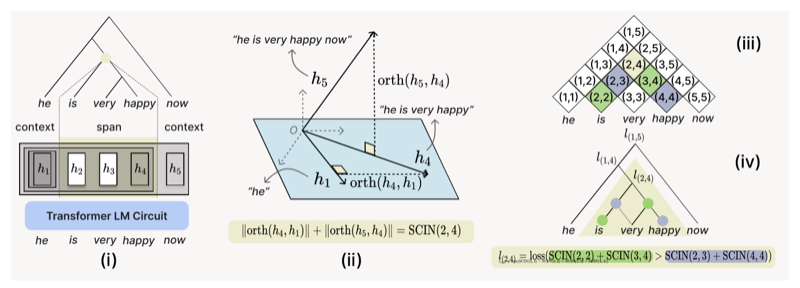
While compositional accounts of human language understanding are based on a hierarchical tree-like process, neural models like transformers lack a direct inductive bias for such tree structures. Introducing syntactic inductive biases could unlock more robust and data-efficient learning in transformer language models (LMs), but existing methods for incorporating such structure greatly restrict models, either limiting their expressivity or increasing inference complexity. This work instead aims to softly inject syntactic inductive biases into given transformer circuits, through a structured regularizer. We introduce TreeReg, an auxiliary loss function that converts bracketing decisions from silver parses into a set of differentiable orthogonality constraints on vector hidden states. TreeReg integrates seamlessly with the standard LM objective, requiring no architectural changes. LMs pre-trained with TreeReg on natural language corpora such as WikiText-103 achieve up to 10% lower perplexities on out-of-distribution data and up to 9.5 point improvements in syntactic generalization, requiring less than half the training data to outperform standard LMs. TreeReg still provides gains for pre-trained LLMs: Continued pre-training of Sheared Llama with TreeReg results in improved syntactic generalization, and fine-tuning on MultiNLI with TreeReg mitigates degradation of performance on adversarial NLI benchmarks by 41.2 points. We release all code to guide future research.
-
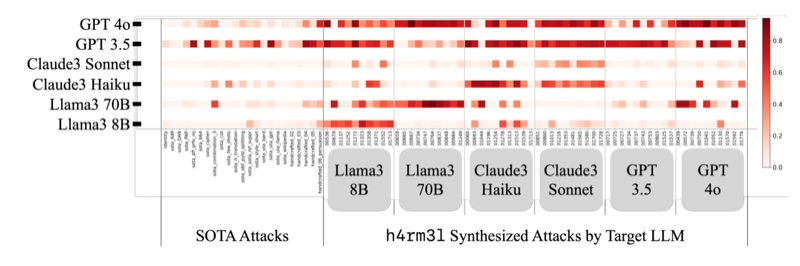
Despite their demonstrated valuable capabilities, state-of-the-art (SOTA) widely deployed large language models (LLMs) still have the potential to cause harm to society due to the ineffectiveness of their safety filters, which can be bypassed by prompt transformations called jailbreak attacks. Current approaches to LLM safety assessment, which employ datasets of templated prompts and benchmarking pipelines, fail to cover sufficiently large and diverse sets of jailbreak attacks, leading to the widespread deployment of unsafe LLMs. Recent research showed that novel jailbreak attacks could be derived by composition; however, a formal composable representation for jailbreak attacks, which, among other benefits, could enable the exploration of a large compositional space of jailbreak attacks through program synthesis methods, has not been previously proposed. We introduce h4rm3l, a novel approach that addresses this gap with a human-readable domain-specific language (DSL). Our framework comprises: (1) The h4rm3l DSL, which formally expresses jailbreak attacks as compositions of parameterized string transformation primitives. (2) A synthesizer with bandit algorithms that efficiently generates jailbreak attacks optimized for a target black box LLM. (3) The h4rm3l red-teaming software toolkit that employs the previous two components and an automated harmful LLM behavior classifier that is strongly aligned with human judgment. We demonstrate h4rm3l’s efficacy by synthesizing a dataset of 2656 successful novel jailbreak attacks targeting 6 SOTA open-source and proprietary LLMs, and by benchmarking those models against a subset of these synthesized attacks. Our results show that h4rm3l’s synthesized attacks are diverse and more successful than existing jailbreak attacks in literature, with success rates exceeding 90% on SOTA LLMs.
2024
-
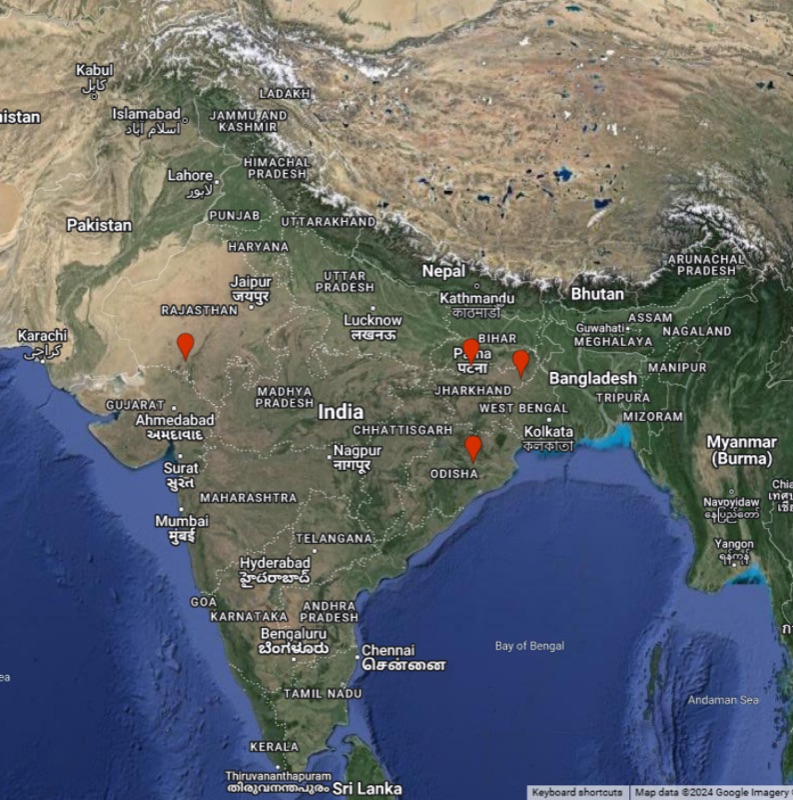 Field observations from deploying a digital participatory tool for water security planning in rural India.
 -
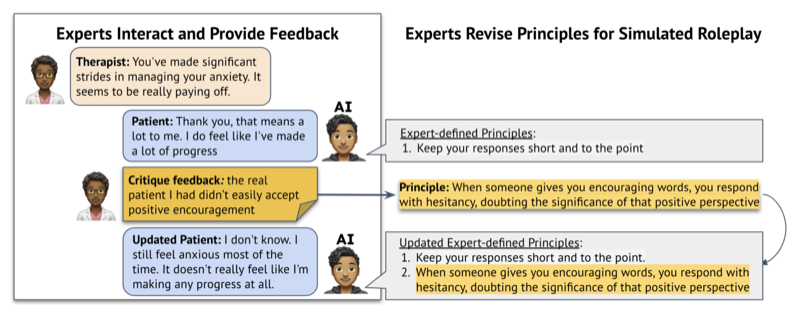
Recent works leverage LLMs to roleplay realistic social scenarios, aiding novices in practicing their social skills. However, simulating sensitive interactions, such as in mental health, is challenging. Privacy concerns restrict data access, and collecting expert feedback, although vital, is laborious. To address this, we develop Roleplay-doh, a novel human-LLM collaboration pipeline that elicits qualitative feedback from a domain-expert, which is transformed into a set of principles, or natural language rules, that govern an LLM-prompted roleplay. We apply this pipeline to enable senior mental health supporters to create customized AI patients for simulated practice partners for novice counselors. After uncovering issues in GPT-4 simulations not adhering to expert-defined principles, we also introduce a novel principle-adherence prompting pipeline which shows 30% improvements in response quality and principle following for the downstream task. Via a user study with 25 counseling experts, we demonstrate that the pipeline makes it easy and effective to create AI patients that more faithfully resemble real patients, as judged by creators and third-party counselors. See our project website at https://roleplay-doh.github.io/ for code and data.
-
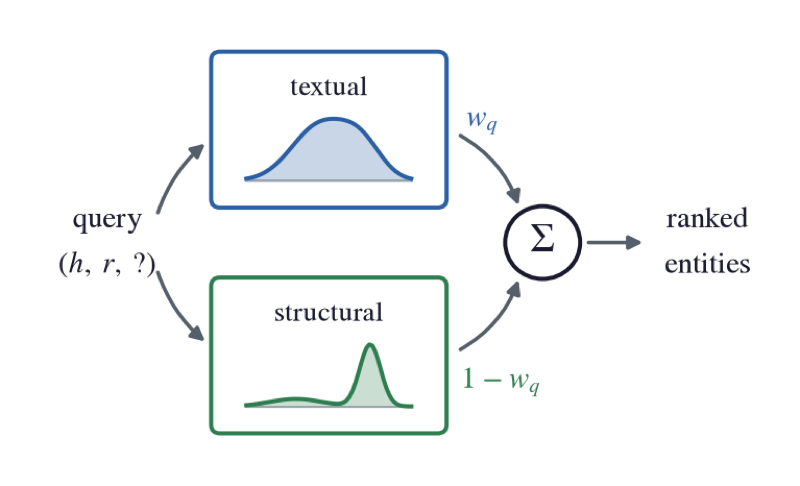
We consider two popular approaches to Knowledge Graph Completion (KGC): textual models that rely on textual entity descriptions, and structure-based models that exploit the connectivity structure of the Knowledge Graph (KG).Preliminary experiments show that these approaches have complementary strengths: structure-based models perform exceptionally well when the gold answer is easily reachable from the query head in the KG, while textual models exploit descriptions to give good performance even when the gold answer is not easily reachable.In response, we propose DynaSemble, a novel method for learning query-dependent ensemble weights to combine these approaches by using the distributions of scores assigned by the models in the ensemble to all candidate entities.DynaSemble achieves state-of-the-art results on three standard KGC datasets, with up to 6.8 pt MRR and 8.3 pt Hits@1 gains over the best baseline model for the WN18RR dataset.
2023
-
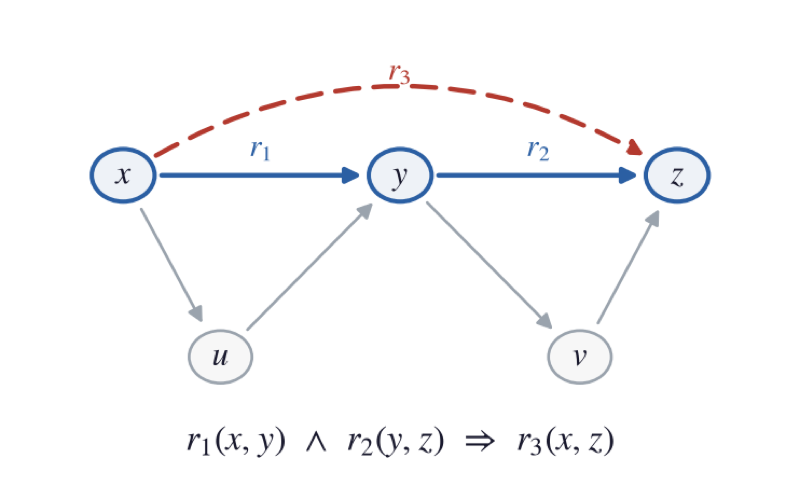
High-quality and high-coverage rule sets are imperative to the success of Neuro-Symbolic Knowledge Graph Completion (NS-KGC) models, because they form the basis of all symbolic inferences. Recent literature builds neural models for generating rule sets, however, preliminary experiments show that they struggle with maintaining high coverage. In this work, we suggest three simple augmentations to existing rule sets: (1) transforming rules to their abductive forms, (2) generating equivalent rules that use inverse forms of constituent relations and (3) random walks that propose new rules. Finally, we prune potentially low quality rules. Experiments over four datasets and five ruleset-baseline settings suggest that these simple augmentations consistently improve results, and obtain up to 7.1 pt MRR and 8.5 pt Hits@1 gains over using rules without augmentations.